


If your home has a tall foyer or a staircase that opens into the entryway, lighting becomes more than “just a fixture.” You need enough brightness for safe footing, the right scale to match the vertical volume, and a look that feels intentional from the moment the door opens.
This is where an Entryway plan built around a Chandelier—especially a Crystal option—often performs best. A crystal chandelier can throw light farther, reduce harsh shadows on stairs, and add a clean focal point that reads well from both the ground floor and the upper landing.
Below is a practical buying guide for choosing entryway lighting that works for high ceilings and staircases, without guessing on size, height, or material.
Why high-ceiling entryways need a different lighting plan
High ceilings create distance: between the fixture and the floor, between the light source and the walls, and between where people stand and what they need to see (steps, thresholds, handrails). In staircases, that distance creates shadow lines that can make the space feel dim even when the bulbs are technically “bright.”
A well-sized chandelier helps because it puts the light source into the center of the volume and distributes it across multiple points. Crystal elements can amplify that distribution by refracting light—useful in tall spaces where a single downlight can feel narrow and spotty.
What this means for you: in a tall entry, you’re not only choosing a style—you’re choosing a lighting structure that needs scale, output, and placement.
How to choose the right chandelier size for a tall entryway
Most “too small” entryway chandeliers fail in two ways: they look lost in the vertical space, and they don’t project enough light onto the floor and stairs.
Use these quick rules as a starting point:
-
Diameter rule (room-based): Add the entryway’s length + width (in feet). The sum (in inches) is a solid chandelier diameter range.
Example: 10 ft × 12 ft entryway → 22" diameter target. -
Staircase visibility rule: If the chandelier will be visible from the staircase and the entry, consider one size up within the range so it reads from both levels.
-
Multi-tier vs. single-tier: For very tall ceilings, a multi-tier crystal chandelier often looks balanced without needing an oversized diameter.
Practical tip: If you’re between sizes, choose the larger option when ceilings are high—vertical volume “shrinks” fixtures visually.
Hanging height rules for high ceilings and staircases
Hanging height is where most stair-entry lighting goes wrong. You want the chandelier low enough to feel connected to the space, but high enough for clearance and sightlines.
Follow these guidelines:
-
Two-story foyer: Aim for the bottom of the chandelier to sit roughly 7–8 ft above the floor (minimum clearance), or align it visually around the midpoint of the tall volume—whichever avoids feeling “stuck to the ceiling.”
-
Over stairs: If the chandelier hangs near the stair run, measure from the stair treads. Maintain comfortable head clearance along the path of travel.
-
Chandelier and upper landing: If you can see the fixture from the second floor, it should feel intentional at that level too—avoid “floating too low” where it blocks views, or “too high” where it disappears.
Decision guide: If your entryway is open to a staircase, prioritize clearance and sightlines first, then fine-tune chain length for aesthetics.

Crystal chandeliers in entryways: what to know about the material
Crystal is popular in tall entries for a reason: it helps light travel and makes the space feel brighter without relying on overly strong bulbs.
Key material points:
-
Real crystal vs. glass: Crystal generally refracts light more strongly, which can reduce “flat” lighting in high-ceiling volumes. Glass can still look beautiful, but the sparkle and spread are usually softer.
-
Maintenance reality: In an entryway, dust is common (doors, airflow, HVAC). Choose a crystal style that’s easy to wipe or that has a design where pieces can be cleaned without removing the whole fixture.
-
Warmth and bulb choice: Crystal looks best when the light is warm and controlled—aim for warm white and use dimming so it doesn’t feel sharp at night.
Practical tip: If your entryway has a lot of hard surfaces (tile, stone, glass), crystal can add brightness, but dimming becomes even more important for evening comfort.
Layering light: chandelier + wall sconces + pendants
A chandelier alone rarely solves staircase lighting. For safe steps and a balanced look, layer the light:
-
Wall sconces for stairs: Place sconces along the stair wall or at landings to reduce shadows on treads and provide guidance lighting. This is the single most practical upgrade for staircases.
Browse options here: Wall Sconce Collection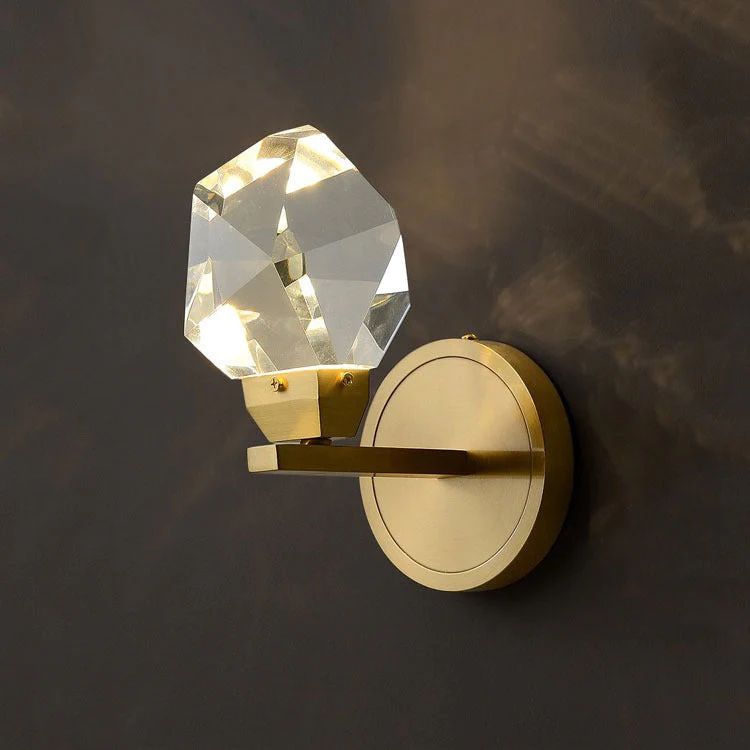
-
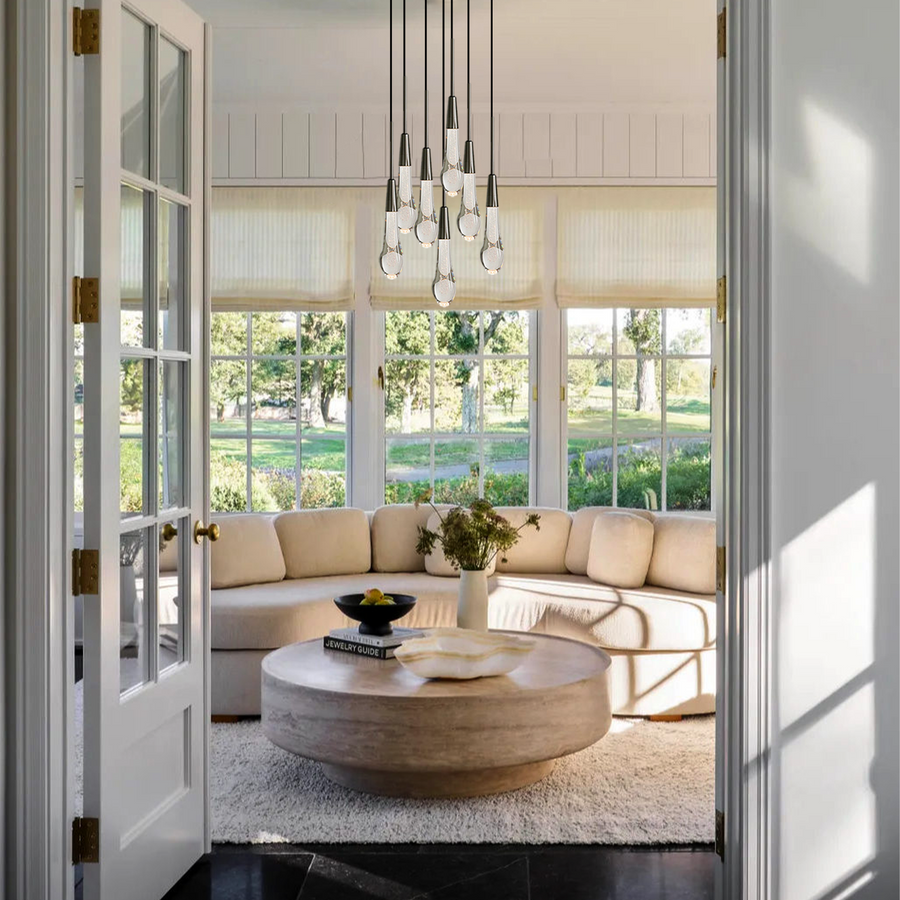
Pendants for secondary zones: If your entryway includes an adjacent hallway, a small nook, or a long corridor off the foyer, pendants can carry the style and keep brightness consistent.
Explore styles here: Pendant Collection
-
Chandelier as the anchor: The chandelier becomes the visual centerpiece while sconces and pendants handle the “work” of lighting paths and corners.
Decision guide: If your staircase feels dim, don’t immediately jump to a bigger chandelier—add or upgrade sconces first, then scale the chandelier.
Buying checklist for entryway chandeliers (high ceilings + stairs)
Use this checklist before you choose:
-
Ceiling height and open volume: Is it one-story, two-story, or open to a landing?
-
Stair position: Will the chandelier hang near the stair run, centered in the foyer, or between both?
-
Fixture size: Does the diameter match the floor footprint and read from the upper level?
-
Drop length: Will it maintain clearance and still feel visually connected to the entry?
-
Brightness and dimming: Can you dim it for evenings while keeping stairs safe?
-
Material and cleaning: Can you realistically maintain crystal in your entry’s airflow and traffic?
If you can answer these six questions, you’ll avoid 90% of entryway lighting regrets.
Recommended Lighting
Here are practical “sets” that work especially well for high ceilings and staircases:
1) Statement Crystal Chandelier (center of foyer)
-
Best for: two-story entries, tall ceilings, and homes where the foyer is a primary visual moment
-
Why it works: crystal helps distribute light across the large volume and reduces dark corners
2) Crystal Chandelier + Stair Wall Sconces
-
Best for: staircases with visible shadow lines on steps
-
Why it works: the chandelier sets the tone; sconces make the staircase safer and more evenly lit
3) Crystal Chandelier + Matching Pendants in nearby hallway
-
Best for: entryways that open into a corridor or adjacent zone (hallway, small vestibule, side passage)
-
Why it works: pendants extend the lighting style while keeping brightness consistent beyond the foyer
Final thoughts: make the entry feel bright, safe, and intentional
For tall entryways and staircases, the best results come from two decisions: choosing a chandelier with the right scale (so it belongs in the vertical volume) and layering the light so stairs aren’t left in shadow.
If you’re ready to build a clean, functional lighting plan, start by pairing your chandelier choice with the right supporting pieces: browse the Wall Sconce Collection for staircase lighting, and the Pendant Collection for hallways or adjacent spaces that need continuity.
Want to consult professional decoration advice?
Feel free to contact us ↓↓↓
Email: support@lumifys.com
Phone: +1 (626) 605-3181


